Jose Cesar Milisenda1, Iago Pinal-Fernandez2, Katherine Pak2, Maria Casal-Dominguez3, Yaiza Duque-Jaimez4, Gloria Garrabou1, Sandra Muñoz-Braceras5, Mariona Guitart-Manpel1, Jose Jiram Torres-Ruiz5, Ester Tobias4, Maria Dolores Cano4, Iban Aldecoa4, Josep Maria Grau1 and Andrew Mammen3, 1Muscle Research Unit, Internal Medicine Service, Hospital Clinic, Barcelona, Spain, 2National Institutes of Health, Bethesda, MD, 3NIH, Bethesda, MD, 4Hospital Clínic de Barcelona, Barcelona, Spain, 5Muscle Disease Unit, National Institute of Arthritis and Musculoskeletal and Skin Diseases, National Institutes of Health, Bethesda, MD
Background/Purpose: Primary biliary cholangitis (PBC) is a chronic autoimmune liver disease that primarily affects middle-aged women. It is characterized by elevated serum alkaline phosphatase levels, the presence of antimitochondrial antibodies (AMAs), and cholangiopathy on liver pathology. Fatigue is a common symptom experienced by up to 80% of patients at the time of diagnosis and during follow-up. Unfortunately, current treatments have not been effective in alleviating fatigue. The objective of this study is to evaluate fatigue and investigate any potential muscle involvement in PBC patients.
Methods: We conducted a single-center, cross-sectional study involving 50 patients who suffered from both PBC and fatigue. Muscle biopsies were performed to whom presented muscle weakness. Histopathological analysis was made and also RNA sequencing was performed on muscle biopsies (n=10) as well as 33 normal muscle biopsies. Muscle biopsies were stained for human immunoglobulin and PDC-E2.
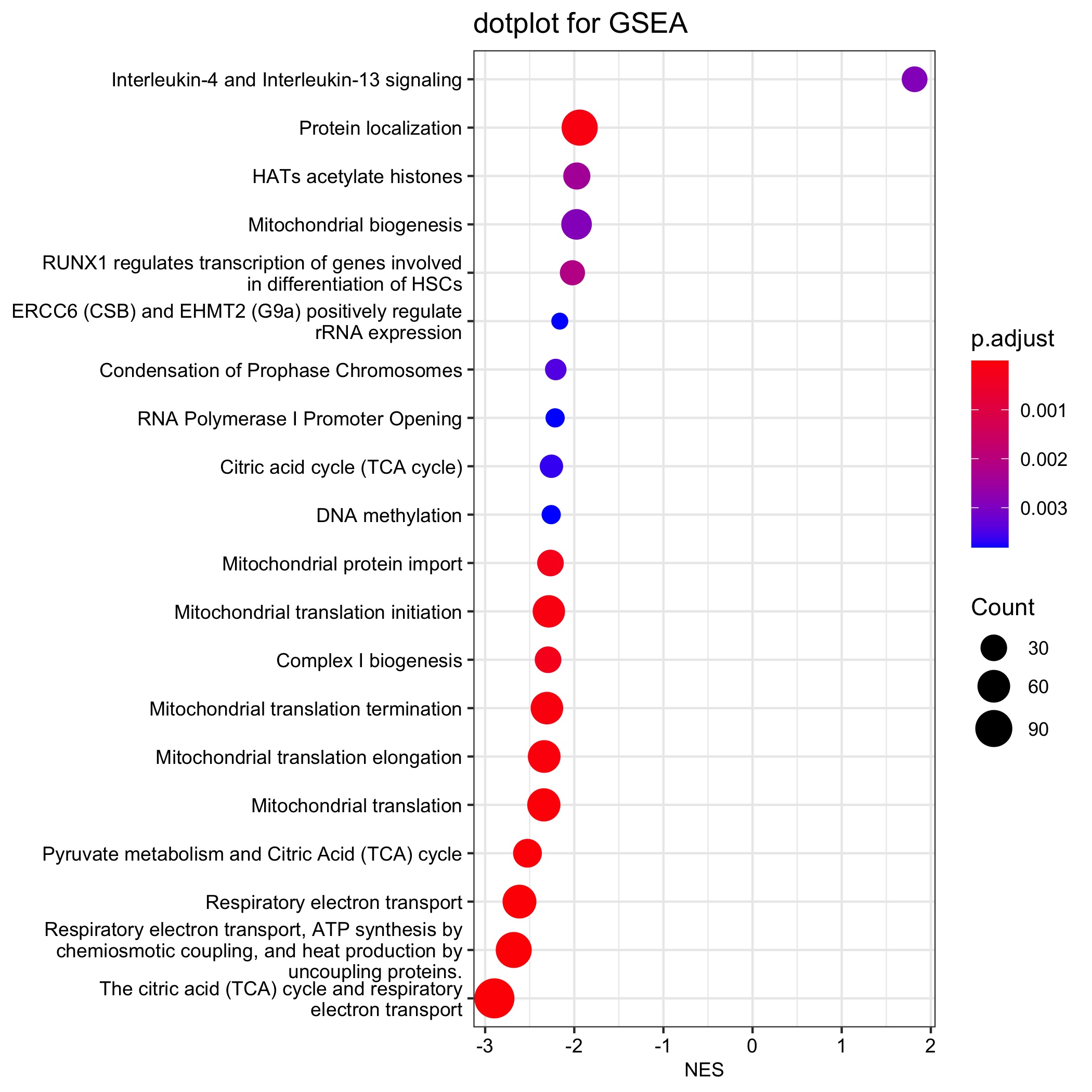
Results: Abnormal accumulation of mitochondria in the subsarcolemal region was observed in both optical and electron microscopy. A significant set of immunoglobulin genes was specifically found to be overexpressed in CBP, while over 50 genes related to mitochondrial function were predominantly underexpressed. In muscle biopsies positive for AMA-M2, immunoglobulins were localized in the cytoplasm and colocalized with PDC-E2.
Conclusion: Based on these findings, we can conclude that there is muscular involvement in PBC, and we hypothesise it is likely mediated by AMA-M2 antibodies.
ME. Mitochondrial accumulation at subsarcolemmal region
Dotplot for GSEA (PBC cases)
J. Milisenda: None; I. Pinal-Fernandez: None; K. Pak: None; M. Casal-Dominguez: None; Y. Duque-Jaimez: None; G. Garrabou: None; S. Muñoz-Braceras: None; M. Guitart-Manpel: None; J. Torres-Ruiz: None; E. Tobias: None; M. Cano: None; I. Aldecoa: None; J. Grau: None; A. Mammen: None.