Session: (1913–1944) Miscellaneous Rheumatic & Inflammatory Diseases Poster III
1936: Higher Rates of Disease Control During the Coronavirus Pandemic in Pediatric Patients with Autoinflammatory Periodic Diseases on Canakinumab Treatment – Interim Data from the RELIANCE Registry
University Hospital Tuebingen, Tuebingen, Germany Tuebingen, Germany
Disclosure information not submitted.
Gerd Horneff1, Norbert Blank2, Jasmin B. Kuemmerle-Deschner3, Joerg Henes4, Birgit Kortus-Goetze5, Prasad T. Oommen6, Anne Pankow7, Tobias Krickau8, Catharina Schuetz9, Ivan Foeldvari10, Juergen Rech11, Frank Weller-Heinemann12, Ales Janda13, Markus Hufnagel14, Florian M. Meier15, Frank Dressler16, Michael Borte17, Ioana Andreica18, Peter Wasiliew19, Michael Fiene20, Daniel Windschall21, Martin Krusche22, Tania Kuempfel23, Julia Weber-Arden24 and Tilmann Kallinich25, 1Asklepios Klinik Sankt Augustin GmbH, Bonn, Germany, 2University Hospital Heidelberg, Heidelberg, Germany, 3med.uni-tuebingen, Tübingen, Germany, 4University Hospital Tuebingen, Tuebingen, Germany, 5Department of Internal Medicine, Division of Nephrology,University Hospital of Giessen and Marburg, Marburg, Germany, 6Department of Pediatric Oncology, Hematology and Clinical Immunology, Center for Child and Adolescent Health,Medical Faculty Heinrich-Heine-University Duesseldorf, Duesseldorf, Germany, 7Department of Rheumatology and Clinical Immunology,Charité-Universitätsmedizin Berlin, Berlin, Germany, 8Pediatrics, Friedrich-Alexander University Erlangen-Nuernberg (FAU), Erlangen, Germany, 9Department of Pediatrics, Medizinische Fakultät Carl Gustav Carus,Technische Universität Dresden, Dresden, Germany, 10Hamburger Zentrum für Kinder- und Jugendrheumatologie, Hamburg, Germany, 11University Clinic Erlangen, Erlangen, Germany, 12Division of Pediatric Rheumatology, Prof. Hess Children's Hospital, Bremen, Bremen, Germany, 13Department of Pediatrics and Adolescent Medicine, University Medical Center Ulm, Ulm, Germany, 14Division of Pediatric Infectious Diseases and Rheumatology, Department of Pediatrics and Adolescent Medicine, University Medical Center, Medical Faculty, University of Freiburg, Freiburg, Germany, 15Department of General Pharmacology and Toxicology, Goethe University Hospital and Goethe University Frankfurt, Frankfurt am Main, Germany, 16Department of Paediatric Pneumology, Allergology and Neonatology, Children's Hospital, Hannover Medical School, Hannover, Germany, 17Hospital for Children & Adolescents, St. Georg Hospital, Leipzig, Germany, 18Rheumazentrum Ruhrgebiet Herne, Herne, Germany, 19Division of Pediatric Rheumatology and autoinflammation reference center Tuebingen, Department of Pediatrics, University Hospital Tuebingen, Tuebingen, Germany, 20Rheumatology Center Greifswald, Greifswald, Germany, 21Clinic of Paediatric and Adolescent Rheumatology, St. Josef-Stift Sendenhorst, Northwest German Center for Rheumatology, Sendenhorst, Germany, 22UKE, Hamburg, Germany, 23Institute of Clinical Neuroimmunology, Biomedical Center and University Hospital, Ludwig-Maximilians Universität München, Muenchen, Germany, 24Novartis Innovative Medicines, Nuernberg, Germany, 25Department of Pediatric Respiratory Medicine, Immunology and Critical Care Medicine, Charité Universitätsmedizin Berlin, Nuremberg, Germany
Background/Purpose: Pediatric patients with autoinflammatory diseases (AID) on Canakinumab (CAN) therapy have been affected by the coronavirus pandemic including SARS-CoV-2 infection, SARS-CoV-2 vaccination, and AID disease management. In the RELIANCE registry, severity of SARS-CoV-2 infection, safety of SARS-CoV-2 vaccination and comparison of disease management before and during pandemic in pediatric patients with cryopyrin-associated periodic syndromes (CAPS), familial Mediterranean fever (FMF), hyper-IgD syndrome/mevalonate kinase deficiency (HIDS/MKD) and tumor necrosis factor receptor-associated periodic syndrome (TRAPS) on CAN therapy was investigated in clinical practice.
Methods: The RELIANCE registry is a prospective, non-interventional, observational study in Germany enrolling pediatric (age ≥2 years) and adult patients with a clinically confirmed diagnosis of AID who routinely receive CAN. Efficacy and safety parameters are recorded at baseline and assessed at 6-month intervals.
Results: The present interim analysis includes data from n=101 pediatric patients with AID enrolled in the RELIANCE registry between October 2017 and December 2022. The median duration of CAN treatment before and during the study was 3.7 years (0-13.5 years).
During the study, 29 SARS-CoV-2 infections were reported for n=27 pediatric patients. 22 infections caused mild symptoms and 7 infections caused moderate symptoms. N=25 (24.8 %) of pediatric patients received at least one SARS-CoV-2 vaccination (15 Comirnaty, 13 not specified). Vaccination reactions (not further specified) were reported in n=3 patients. No reactions were classified as serious.
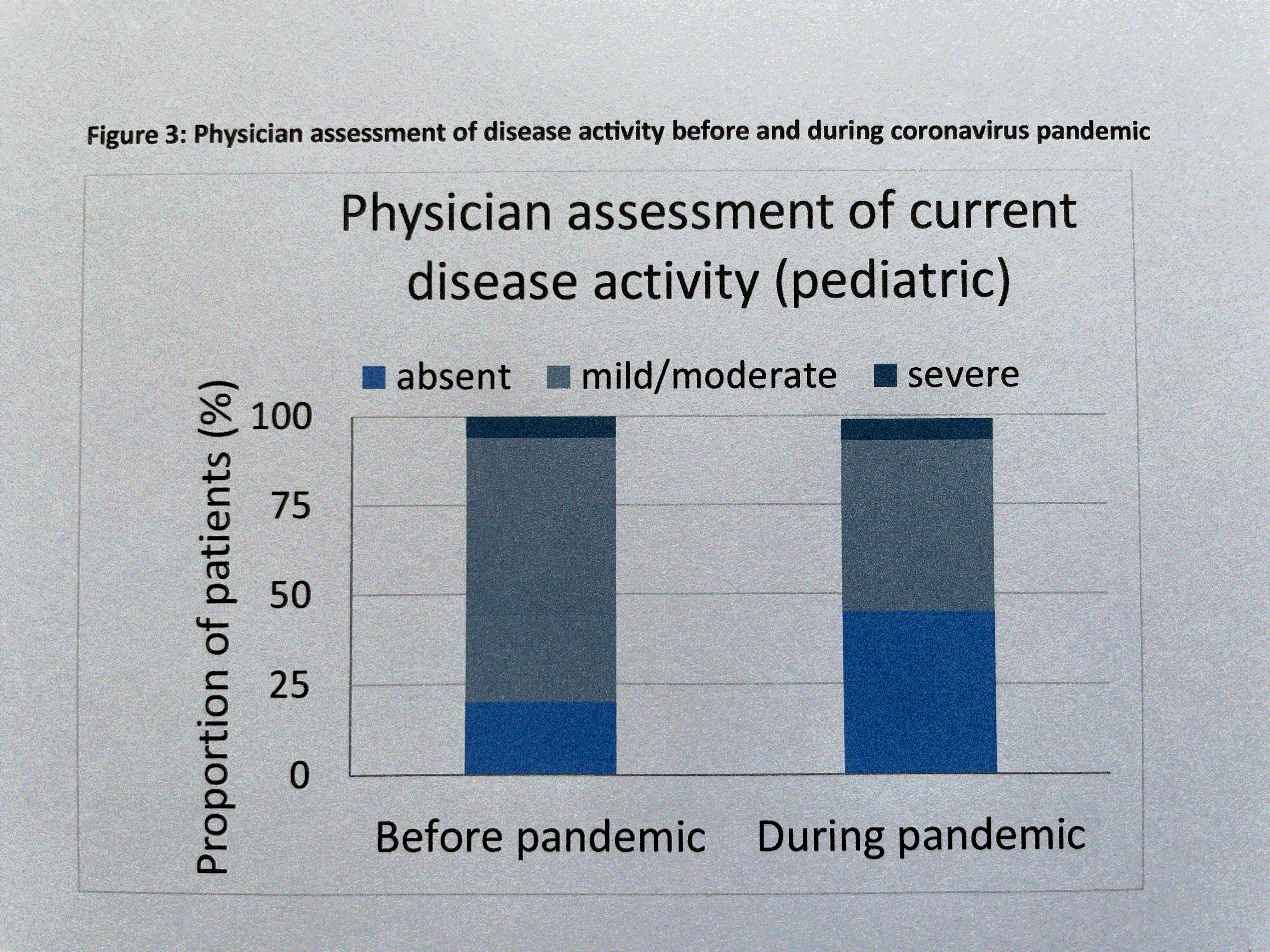
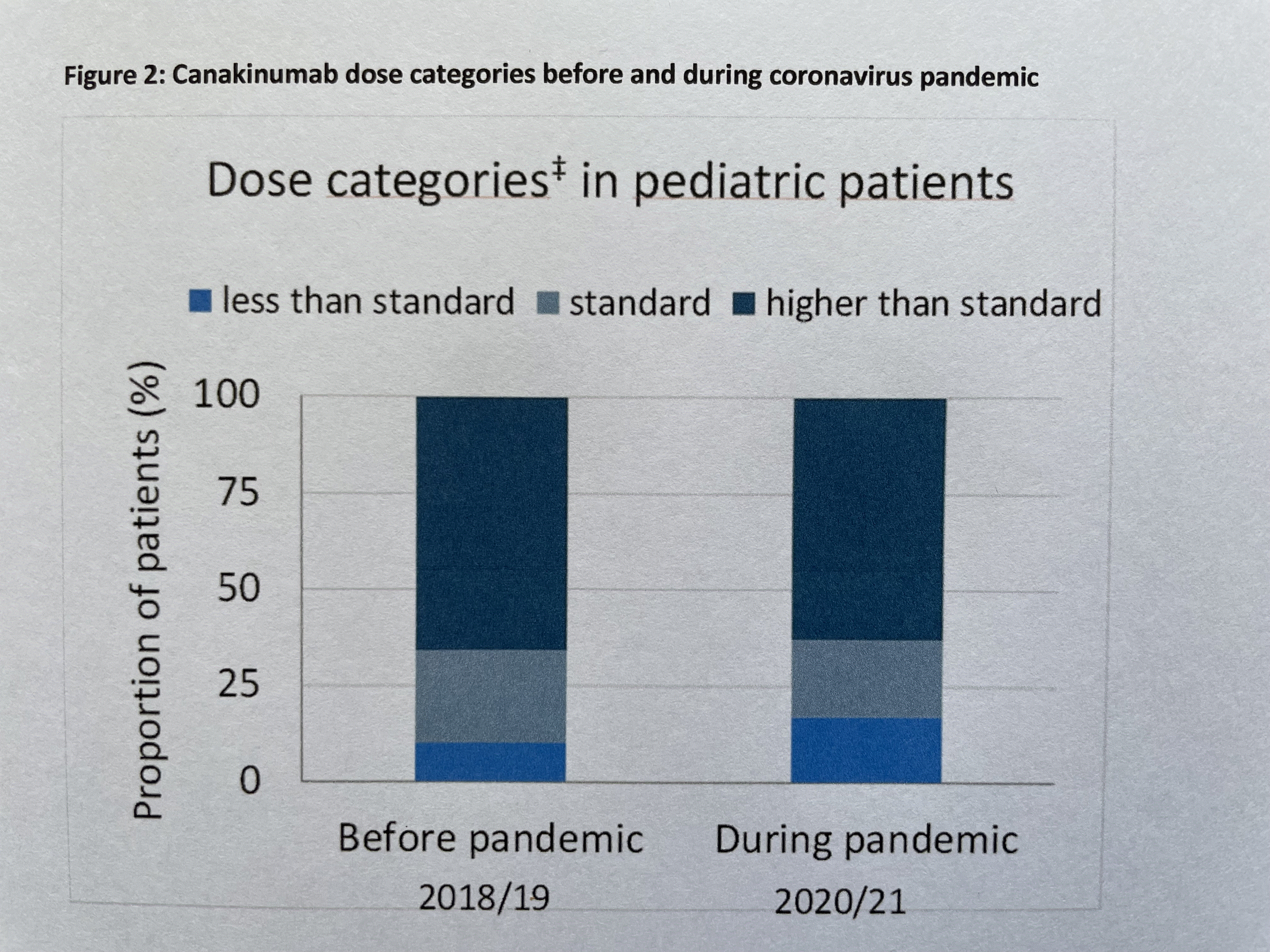
During the COVID-19 pandemic in 2020 and 2021, only 83 % of regular patient visits were performed (Fig. 1). In addition, patients received slightly lower CAN dosing (20% standard dose CAN [SD], 17% lower than SD, and 63% higher than SD compared to 24% SD, 10% lower than SD, and 66% higher than SD before pandemic (Fig. 2). However, disease activity by patient rating (VAS score 1-10) improved from 3 before to 2 during the pandemic. By physician global assessment, the proportion of pediatric patients with no disease activity arose from 20% before to 45% during the pandemic (Fig. 3). In contrast: no major changes in disease activity were documented in adult patients.
Conclusion: Pediatric AID patients under long-term Canakinumab treatment experienced improved disease control during the Coronavirus pandemic.
Figure 1: Planned and performed physician visits of pediatric patients before and during coronavirus pandemic.
Figure 2: Canakinumab dose categories before and during coronavirus pandemic.
Figure 3: Physician assessment of disease activity before and during coronavirus pandemic.
G. Horneff: GSK, 6, Janssen, 6, MSD, 5, 6, Novartis, 5, 6, Pfizer, 5, 6, Roche, 5, 6, Sanofi, 6, Sobi, 6; N. Blank: Novartis, Sobi, 5, Novartis, Sobi, Lilly, Pfizer, Abbvie, BMS, MSD, Actelion, UCB, Boehringer-Ingelheim, Roche, 2; J. Kuemmerle-Deschner: Novartis, AbbVie, Sobi, 2, 5; J. Henes: AbbVie/Abbott, 2, 6, Boehringer-Ingelheim, 2, 6, Bristol-Myers Squibb(BMS), 2, 6, GlaxoSmithKlein(GSK), 2, 6, Janssen, 2, 6, Novartis, 2, 6, Pfizer, 2, 6, UCB, 2, 6; B. Kortus-Goetze: Novartis, 2; P. Oommen: Novartis, 5; A. Pankow: None; T. Krickau: Novartis, 2, 5, 6; C. Schuetz: Novartis, 5; I. Foeldvari: Novartis, 2; J. Rech: AbbVie, Biogen, BMS, Chugai, GSK, Janssen, Lilly, MSD; Mylan, Novartis, Roche, Sanofi, Sobi, UCB, 2, 6, Novartis, Sobi, 5; F. Weller-Heinemann: None; A. Janda: None; M. Hufnagel: Novartis, 5; F. Meier: Novartis, 6; F. Dressler: Abbvie, Mylan, Novartis, Pfizer, 2, Novartis, 5; M. Borte: Pfizer, Shire, 5; I. Andreica: AbbVie/Abbott, 1, 6, Amgen, 1, 6, AstraZeneca, 1, 6, Chugai, 6, Novartis, 1, 6, Sobi, 1, 6, UCB, 1, 6; P. Wasiliew: None; M. Fiene: None; D. Windschall: None; M. Krusche: Chugai, 2, 6; T. Kuempfel: None; J. Weber-Arden: Novartis, 3; T. Kallinich: Roche, 6.