University of Pennsylvania Perelman School of Medicine Philadelphia, PA, United States
Disclosure information not submitted.
Kevin Burt1, Vu Nguyen1, Lance Murphy2, De'Broski Herbert1, Robert Mauck1 and Carla Scanzello3, 1University of Pennsylvania, Philadelphia, PA, 2University of Pennsylvania Perelman School of Medicine, Philadelphia, PA, 3Translational Musculoskeletal Research Center, Corp. Michael J Crescenz VA Medical Center,4Division of Rheumatology, Perelman School of Medicine University of Pennsylvania, Philadelphia, PA
Background/Purpose: Osteoarthritis (OA) is the most common joint disorder, and growing evidence has identified inflammation to be a major driver of disease progression. During disease, the synovium is identified as a reservoir of inflammatory mediators and immune cells, primarily consisting of monocyte/macrophages.1 CD14, a co-receptor of inflammatory toll-like receptor signaling and a macrophage-activation-related protein, has been identified within synovial fluid and positively associated with joint space narrowing and knee pain.2 We previously reported that global genetic CD14 deficiency in mice protects against OA-associated bone-remodeling and pain-related joint dysfunction.3 Thus, we hypothesize an anti-CD14 therapeutic will mediate inflammatory activation in the synovium during OA, and mitigate disease progression and pain.
Methods: OA model (n=12-14): We performed destabilization of the medial meniscus (DMM) surgery to induce OA in skeletally mature (10-12 wk old) C57BL/6 mice.3Intervention: Mice were treated intra-articularly with either an anti-CD14 monoclonal antibody (mAb, clone biG53) or an IgG2a control (both 0.5mg/kg), two dosing strategies were tested: 1) Prevention strategy:mice received anti-CD14 or IgG control weekly x 3 doses, starting 48 hrs post DMM. 2) Treatment strategy: mice received 3 weekly injections beginning 4 wks post DMM. Behavioral analysis: Evaluation of spontaneous cage behaviors was performed via the laboratory animal behavior observation registration and analysis system (LABORAS, Metris).3 Paw weight bearing analysis was performed via the advanced dynamic weight bearing (ADWB, Bioseb) system.4Immunohistochemistry (n=3): In a separate early dosing 4-wk study, whole knee joints were fixed, decalcified, paraffin embedded, and sectioned. Sagittal sections underwent antigen retrieval and overnight incubation with primary antibodies (monocyte: Ly6C/D, macrophage: CD64), followed by incubation with fluorescent secondary antibodies, and lastly cover-slipped with mounting medium containing DAPI nuclear dye and imaged.
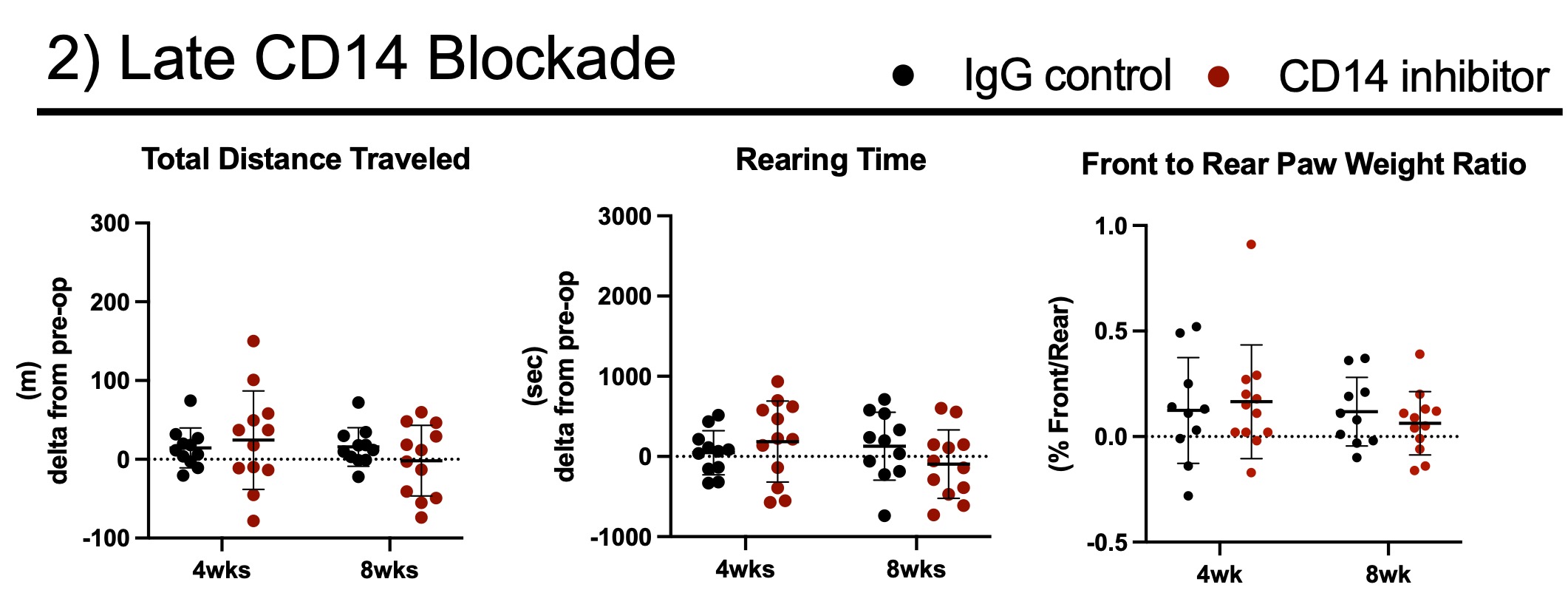
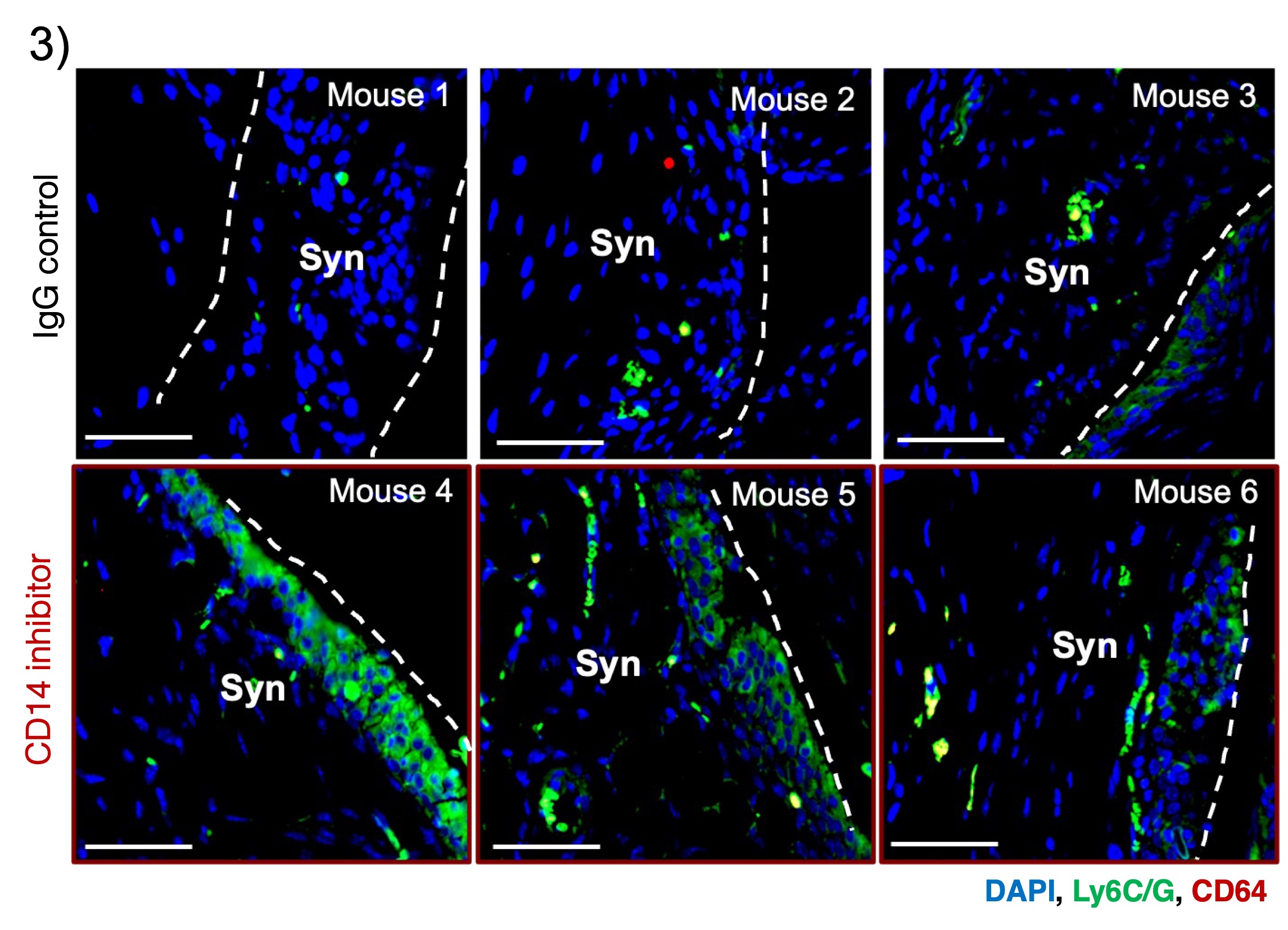
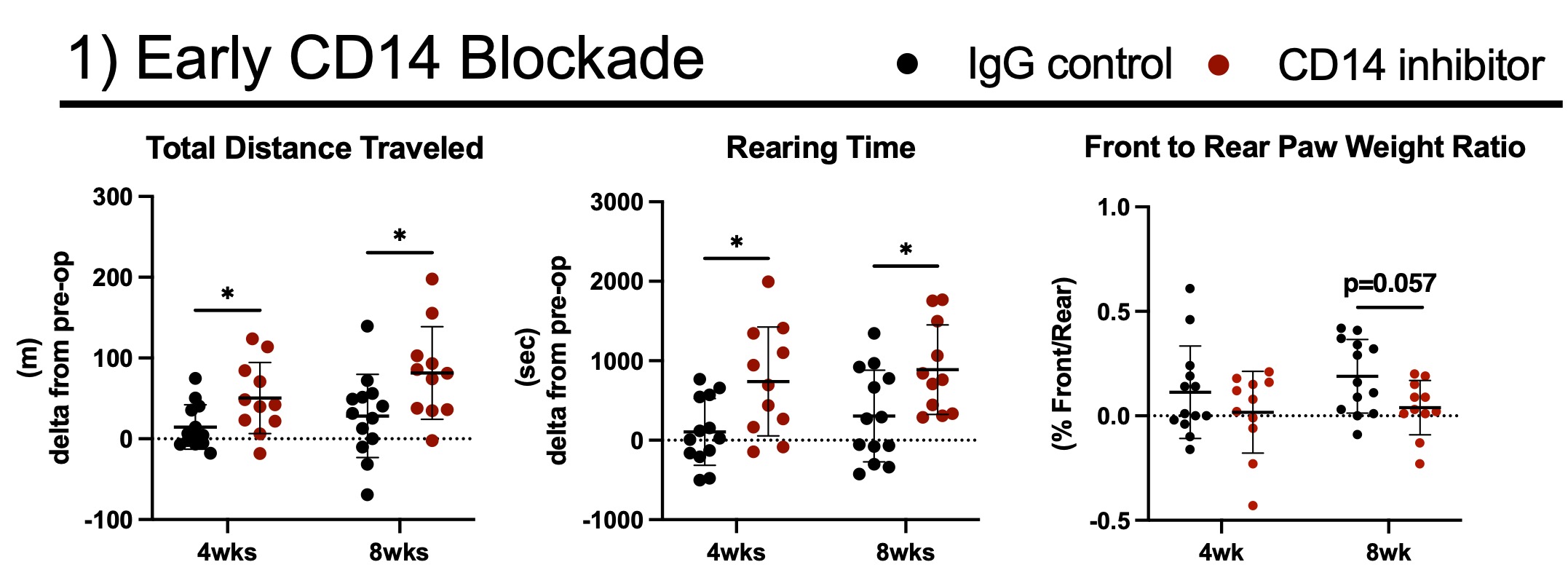
Results: Prevention strategy: Early CD14 blockade increased total distance traveled and rearing time at 4- and 8-wks post DMM, compared to control mice (p< 0.05) (Fig. 1). Front to rear paw weight ratio 8-wks post DMM had a strong decreasing trend (p=0.057) in CD14 inhibitor treated mice compared to controls (Fig. 1). Treatment strategy: When treatment was delayed (4 wks post-DMM), no significant behavior or weight bearing changes were observed between groups (Fig. 2). Evaluating inflammation, early CD14 blocked increased the presence of Ly6C/G+ cells within the synovial lining layer compared to control at 4-wks post DMM (Fig. 3). Few CD64+ cells were observed (Fig. 3).
Conclusion: Results revealed early delivery of a CD14 blocking mAb after DMM injury was more effective at improving mobility, compared to delayed dosing. Immunostaining suggests that anti-CD14 treatment may be modulating myeloid cell activation, clearance, or differentiation within the synovium during OA progression. Results provide significant support for further evaluation of CD14 as a therapeutic for painful OA.
Figure 1: Spontaneous behavioral testing results from the early CD14 blockade groups. LABORAS behavioral analysis of the change from pre-op in total distance traveled (m) and time spent rearing (s). ADWB weight bearing analysis of the change from pre-op of front to rear paw & weight % ratio. *p<0.05 Student’s T-test.
Figure 2: Spontaneous behavioral testing results from the late CD14 blockade groups. LABORAS behavioral analysis of the change from pre-op in total distance traveled (m) and time spent rearing (s). ADWB weight bearing analysis of the change from pre-op of front to rear paw & weight % ratio. *p<0.05 Student’s T-test.
Figure 3: Immune cell presence following DMM. Fluorescent images of mice from IgG control and CD14 blockade treated mice (n=3) at 4 wks post DMM, stained for a general myeloid cell marker (Ly6C/G) and mature macrophage marker (CD64). Synovium (syn) is labeled with the lining layer indicated (white dashed line). Scale bar = 50μm.
K. Burt: None; V. Nguyen: None; L. Murphy: None; D. Herbert: None; R. Mauck: None; C. Scanzello: None.