Session: (1442–1487) SLE – Diagnosis, Manifestations, & Outcomes Poster II
1471: A Comparative Study of Lupus Nephritis Class II and IgA Nephropathy: Renal Disease Other Than Lupus Nephritis in Systemic Lupus Erythematosus Patients
Korea University Ansan Hospital seoul, South Korea
Disclosure information not submitted.
Eun song Kang1 and Seokchan Hong2, 1Korea University Ansan Hospital, Seoul, South Korea, 2Department of Rheumatology, Asan Medical Center, University of Ulsan College of Medicine, Seoul, South Korea
Background/Purpose: Lupus nephritis (LN) is one of major organ involvement of SLE and renal biopsy is commonly performed in SLE patients suspected of having LN to assess the severity of renal damage and guide treatment decisions. However, there have been cases where renal biopsies performed in SLE patients resulted in the diagnosis of other renal diseases, such as IgA nephropathy. The prevalence and similarities between IgA nephropathy and LN in SLE patients have not been extensively studied. This study aims to investigate the characteristics of SLE patients diagnosed with renal disease other than LN, with a focus on IgA nephropathy and its similarities and differences with class II LN.
Methods: A retrospective analysis was conducted on SLE patients who underwent renal biopsies between April 1997 and October 2022 at a single tertiary care academic center. Patients diagnosed with renal diseases other than LN were identified, with a particular focus on IgA nephropathy. Baseline characteristics, laboratory findings, and renal biopsy pathologic findings were collected and statistical analyses were performed.
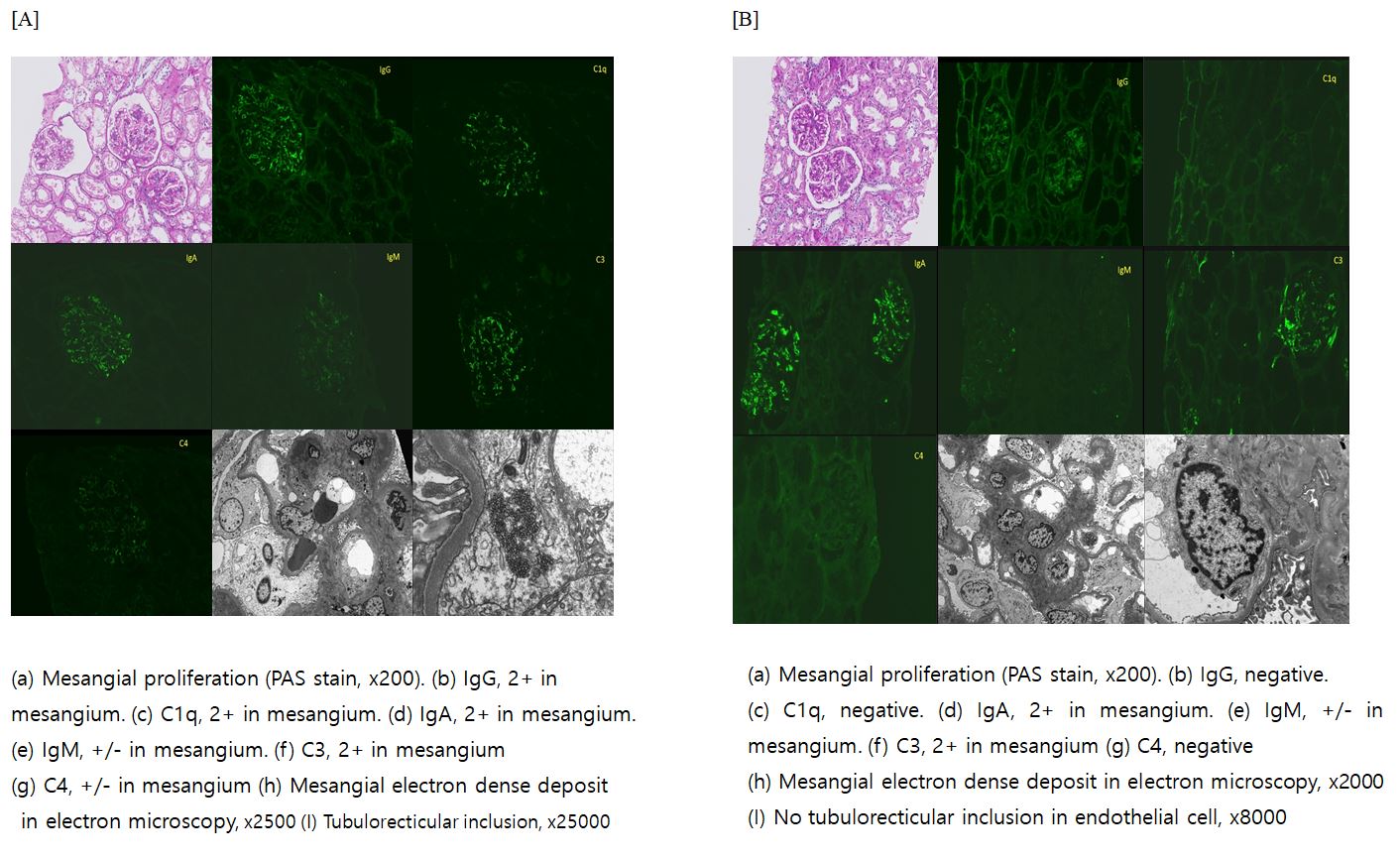
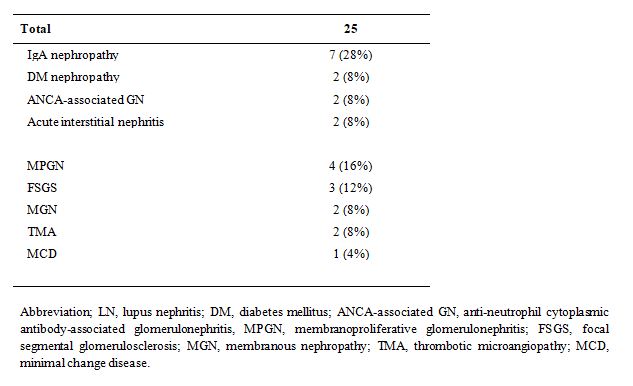
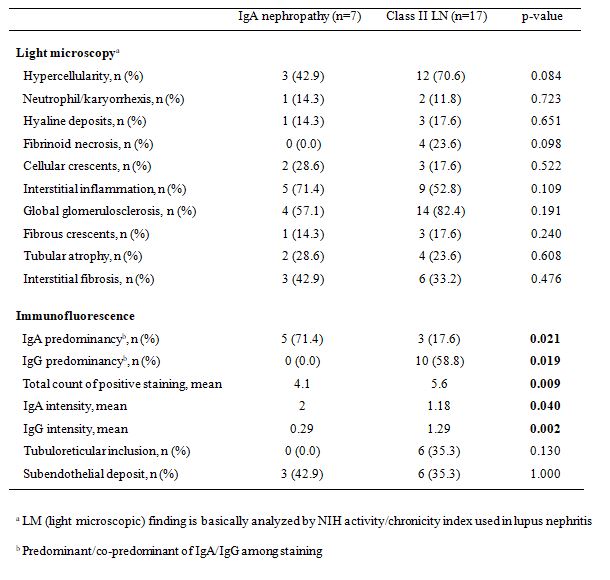
Results: Among 483 SLE patients who underwent renal biopsies, 25 (5%) were diagnosed with renal diseases other than LN. The most common non-LN pathology was IgA nephropathy, accounting for 28% of cases. A comparison between patients with IgA nephropathy and class II LN showed no significant differences in age, sex, SLEDAI, eGFR or UPCR. In pathologic finding, IgA nephropathy exhibited predominant IgA staining with higher intensity, while class II LN demonstrated "Full house" pattern. Long-term renal outcomes did not significantly differ between the two groups.
Conclusion: SLE patients can have renal diseases other than LN and IgA nephropathy was the most observed non-LN pathology in SLE patients. Comparison between IgA nephropathy and class II LN revealed similarities in clinical and pathological characteristics, although there were differences in immunofluorescence findings. The long-term renal outcomes between the two groups have no significant differences. These results contribute to a better understanding of the diagnostic accuracy of renal diseases other than LN in SLE patients.
Figure 1. Comparison of Renal outcome of patients with IgA nephropathy and class II Lupus nephritis in SLE patients
Table 1. Kidney biopsy proflie of non-LN in patients with SLE
Table 2. Comparison of Kidney biopsies between IgA nephropathy and class II lupus nephritis in patients with SLE



.jpg "Eunsong Kang, MD photo")